
Q&A
Q&A Parc du
chocolat Cailler
Do you have any questions about the Parc du chocolat Cailler, the Cailler chocolate-themed park? Find out the answers to the most frequently asked questions here.


Agreement between Jogne Society and Nestlé Switzerland
In principle, Jogne Society will initially be responsible for the process of obtaining the construction permit for the park. Subsequently, it will finance, build and manage the park. Nestlé Switzerland will sell Maison Cailler and plots of land, make parts of its factory available for the park, and authorise the future park to use the Cailler brand. Concretely, contracts have been signed between Jogne Society and Nestlé Switzerland. These set out the terms of the above. Their precise content, particularly the transaction amount, remains confidential.
This is an ambitious project, led by the founders of Jogne Invest rather than by Nestlé. It requires a wide range of expertise, both for the development and construction phases and, in the future, for the operational phase. Nestlé believes that its core expertise lies in the production of foodstuffs and chocolate; this is why Nestlé is neither a shareholder nor involved in the implementation and management of the project. Jogne Invest SA is an independent, competent entity entirely dedicated to the chocolate park and best placed to see the project through to a successful conclusion.
Jogne Society
Jogne Society was founded by four local personalities with extensive experience in property, investment, marketing and business development. To develop the park, Jogne Society enlisted the services of leading theme park specialists: the agencies BRC Imagination Arts and Jora Vision were engaged to design the park’s scenography.
Investors assume the risks associated with the authorisation procedures. The necessary approvals at local, cantonal and regional levels are currently being processed and must be granted before any construction work on the chocolate park can begin. The primary risk relates to the successful completion of these procedures.
Over ten million francs have been invested so far, mainly in the process of obtaining the construction permits and related studies, as well as in the acquisition of land from third parties.
Association Gruyère-Chocolat
The association serves as a platform that brings together all the project’s stakeholders. At this stage, its members include Jogne Society, the Association régionale la Gruyère ARG (Gruyère Regional Association), the Union fribourgeoise du tourisme UFT (Fribourg Tourism Union), the Fédération patronale et économique FPE (Employers’ and Economic Federation) and Nestlé Switzerland. The association works to develop the project from economic, tourism and planning perspectives. Additional organisations may join the association in the future.
Construction of the park
The public consultation will begin in March 2026. Subject to the relevant procedures, we hope to secure the necessary permissions between late 2026 and early 2027 and, depending on the progress of the works, to open the park between 2030 and 2031.
Contractors for the construction of the park will be selected based on their specialisation and our requirements in terms of trades. Jogne Society wishes to work as much as possible with companies from the region. However, it is too early to comment on any more specific selection criteria. To date, Jogne Society has worked with 26 contractors, the vast majority of whom are based in the Gruyère region or the canton of Fribourg.
The current Maison Cailler is expected to remain open during the construction work. Much of the work can be carried out whilst the chocolate factory remains in operation, as it mainly involves an extension to existing buildings that are not currently in use. We will not close the current Maison Cailler until the extension has been completed and opened to visitors.
Environment, landscape and heritage
We have carried out extensive studies to assess the park’s impact on the environment, in accordance with the law. Whenever the project has an impact, we have worked with specialists to identify appropriate mitigation measures. We have also engaged in dialogue with organisations entitled to appeal in the areas of environment, transport and heritage. We have incorporated their proposals wherever possible.
On the contrary, the project aims to celebrate and promote the agricultural and chocolate-making traditions of the Gruyère region. It will primarily revitalize historic buildings that are currently disused – the existing factory buildings that forms part of the region’s unique industrial heritage. New buildings will be constructed on already developed areas, except for the car park in Liaubon, which is already designated as a development zone. The detailed development plan provides for minor zoning changes as part of the overall project.
Yes, the project complies with all relevant legislation. Infrastructure and landscaping works are planned in the vicinity of the Jogne river, subject to compliance with legal requirements and approval by the relevant cantonal and federal authorities. Should the canton require further improvements, the project developers remain at its disposal.
The park aims to rely exclusively on local and renewable energy sources, including hydroelectric power and heat pumps, supplemented by solar panels.
Mobility
This is what the mobility study shows. The site has the advantage of being directly served by the train station Broc-Chocolaterie, which is located immediately adjacent to park’s entrance. Since the start of 2023, a direct train line between Bern and the Maison Cailler – the Chocolat Express – has been operating without the need to change trains in Bulle. The park can be reached by train from Lausanne or Bern in 90 minutes. This supports the ambitious goals for the share of public transport users. To achieve these, targeted communication measures will be implemented to highlight the advantages of travelling by train. Furthermore, commercial offers will be introduced to make rail travel more attractive than car use, including combined tickets, discounts, priority or special services.
The revised capacity reflects all identified requirements, including spaces for visitors, hikers exploring the Jogne Gorges, Mobility vehicles, Park & Ride users, and staff. It should also be noted that no visitor parking will be provided in the Broc plain. In addition, the car park has been designed to accommodate the anticipated increase in visitor numbers.
The municipality of Broc has anticipated this issue and has developed a parking scheme designed to prevent free, unlimited public parking spaces from competing with the Liaubon car park. The scheme will prioritise the needs of Broc’s residents and is expected to come into force before the park opens, supported by clear signage. In addition, the park management will be responsible for ensuring proper implementation of the mobility plan.
Local residents will continue to access the area via Rue Nestlé or Rue du Martinet. The project will fund the refurbishment of the Martinet Bridge, which is required to enable its reopening to traffic restricted to local residents.
Maison Cailler and factory
Yes. This transfer will proceed once two conditions being met: (a) Jogne Society obtaining the necessary permissions for building for the park, and (b) Jogne Society securing the required funding for its construction.
The Parc du chocolat Cailler will create employment opportunities. Initial estimates indicate that more than 200 jobs will be created in the long term.
We cannot speculate on production volumes. However, we are convinced that this project will strengthen Cailler’s image and visibility in Switzerland.
Procedures
To date, we are not aware of any declared opponents.
Clearly, a project of this nature must be planned and carried out in close collaboration with the Fribourg authorities and the public. That is why the Association Gruyère-Chocolat was established; it brings together a wide range of stakeholders and will continue to do so in a transparent manner. To date, its members include, for example, the Association régionale de la Gruyère, the Union fribourgeoise du tourisme, and the Fédération patronale et économique.
We have organised, and will continue to organise, public meetings and will develop the project while taking into account the views of a broad range of stakeholders.
From the outset, the Parc du chocolat Cailler project has been committed to communicating and engaging with as many people as possible. It was presented to the people of Broc and announced to the media in early 2022, following initial feasibility studies carried out with the support of the canton’s economic development agency. In October 2022, 90,000 people were able to examine an initial model in greater detail at the Comptoir Gruérien (Gruyère trade fair), where the project was the guest of honour. The project was also showcased at the Seislermäss (Sense district fair) in May 2025, which attracted 80,000 visitors. Since late 2023, the project has undergone various preliminary review and consultation procedures with municipal, cantonal and even federal authorities, as well as with other stakeholders such as nature and environmental protection associations. The project has evolved and been adapted to incorporate the requests arising from these procedures. It is now ready for public consultation.
An information evening was held for the residents of Broc prior to the public consultation, on 18 March 2026.
Tourism and the economy
After more than 15 years of success, Maison Cailler already attracts nearly 500,000 visitors per year. In the 2025 financial year, Maison Cailler recorded a total of 482,428 visitors, the highest figure since its opening. It is the leading paid tourist attraction in the French-speaking part of Switzerland. These figures suggest that the Broc chocolate-themed park has the potential to attract large visitor numbers, with up to 1.2 million in the long term.
We organised an invitation-only competition involving five internationally renowned agencies. Two agencies were selected: BRC Imagination Arts, based in Los Angeles, and Joravision, a Dutch company, to create a flying theatre in partnership with the Fribourg tourism sector. These two agencies are among the world’s leading firms in the field of experience design, with projects worldwide for some of the world’s most prestigious destinations. Both have presented an immersive project of exceptional quality that is certain to inspire visitors from Switzerland and beyond.
It should be noted that, according to a study by the Union fribourgeoise du tourisme, the current Maison Cailler already generated over CHF 40 million in economic benefits for the canton in 2018. The major investments in the construction of the park and the hotels, each amounting to around CHF 200 million, will also benefit local businesses. Once operational, the new attractions, combined with the hotel facilities, will strengthen Gruyère’s position as a tourist destination and extend the average length of stay. According to current estimates, around 200 jobs will be created by the park itself. In addition, the hotels are expected to generate approximately 100 jobs.
The Parc du chocolat Cailler will pay its taxes to the municipality of Broc, which represents a change from the current situation. In addition, the municipality and Jogne Society have agreed on a mechanism to ensure that Broc receives financial contributions from the moment the park opens. Finally, a fund to support sporting and cultural activities, as well as local clubs, will be financed directly by the park, amounting to between CHF 50,000 and CHF 100,000 per year, depending on the park’s performance.
Discover also
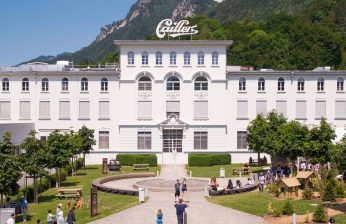
The Parc du chocolat Project
The Parc du chocolat Cailler in Broc will bring the magic of chocolate to life in an unforgettable, immersive experience.
About
The Parc du chocolat Cailler is carried by the Association Gruyère-Chocolat, which unites all parties involved in the project.
News and Events
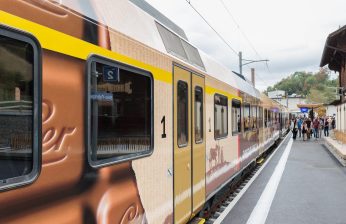
Find the latest information and news on the Parc du chocolat Cailler here.